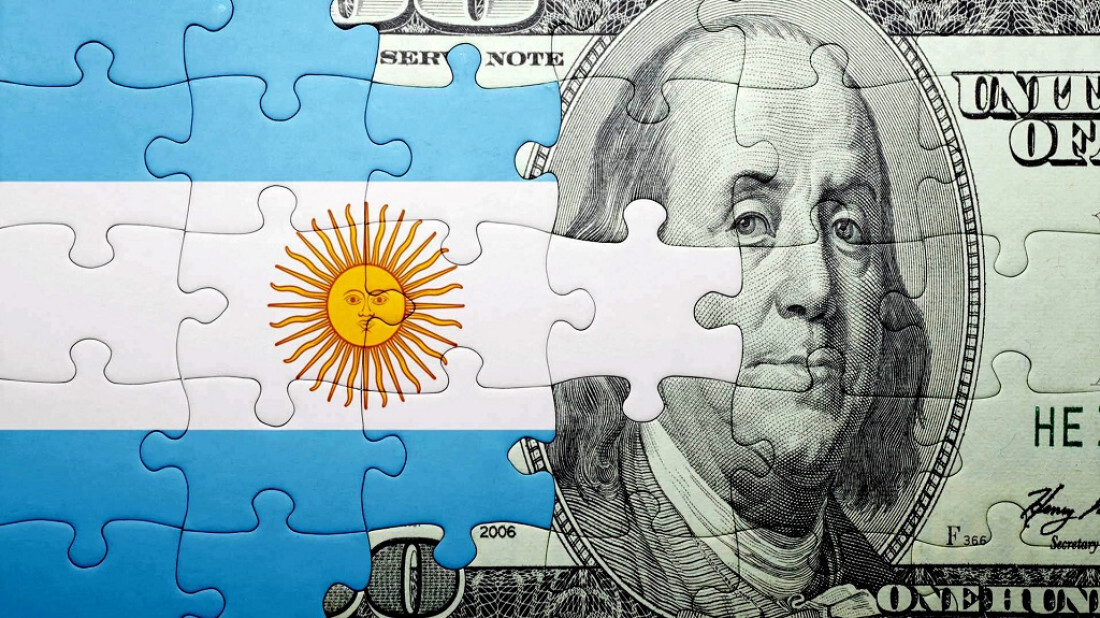
A report by the British newspaper Financial Times revealed that the Donald Trump administration is considering promoting the adoption of the dollar as the official currency in various countries to counter China's economic expansion. Economist Steve Hanke considered Argentina an 'obvious candidate' for such a measure, due to its repeated loss of confidence in the peso, its inflationary history, and its de facto dollarized economic structure. The Financial Times states that the initiative is framed as an effort by the US government to maintain the dollar's hegemony against Beijing's advance, which in recent years has been promoting the use of the yuan in emerging markets. Similarly, the text quotes lawyer and sovereign debt specialist Jay Newman, who considered that 'dollarization is what Argentina should do if it wants to break the cycle,' though he warned that 'every time dollars are injected into the economy, the oligarchy and those with accounts abroad take them.' On the other hand, the International Monetary Fund (IMF) again reiterated its stance against full dollarization processes, warning that it would subject Argentina to a monetary policy determined by the US Federal Reserve, with the risk of low growth and a lack of local adjustment tools. The report adds that since 1995, 76% of Argentina's debt would have disappeared due to capital flight, a product of the structural distrust in the national currency. However, the British report indicates that Washington is closely monitoring the Argentine situation due to its potential to become a regional laboratory for US monetary policy. The article signed by Claire Jones, Amelia Pollard, and Joseph Cotterill also reviews the history of Argentina's link with the dollar, from the convertibility of the 1990s to recent attempts at monetary stabilization. In this context, the Argentine case once again places itself at the center of international attention as a possible testing ground for a new US economic strategy. 'All these bailouts are a terrible business,' Hanke stated in an interview with the outlet. Even though there are no concrete definitions, analysts agree that the mere mention of the initiative constitutes a signal of Washington's interest in strengthening the geopolitical power of the dollar in Latin America. According to the article, Argentina tops the list of possible candidates, followed by Lebanon, Pakistan, Ghana, Turkey, Egypt, Venezuela, and Zimbabwe. According to the British publication, since August, White House officials have held meetings with Steve Hanke, an economist and professor specializing in dollarization processes, who confirmed that the conversations exist and that 'this is a policy they are taking very seriously, although it is still in progress.' The Trump administration would seek to reinforce the dollar's presence as a tool of economic and political power, offering assistance and backing agreements to countries that choose this path. A White House spokesman, Kush Desai, stated that 'President Trump has repeatedly affirmed his commitment to maintaining the strength and power of the dollar,' although he clarified that, for the moment, the meetings with experts should not be interpreted as a formal policy of the US government. In the case of Argentina, the possibility of dollarization is not new. During the 2023 presidential campaign, Javier Milei proposed adopting the dollar as legal tender, although his Minister of Economy, Luis Caputo, stated in October that 'there are not enough dollars to do so at this moment'. Buenos Aires, November 2, 2025 – Total News Agency-TNA –